
Bright, Wandiligong & Harrietville
Bright
In 1824, Hamilton Hume and William Hovell conducted an exploration of the area, and they gave the Ovens River its name. Initially, the town was called Morse’s Creek in honor of F. H. Morse. However, in 1861, it was renamed Bright, paying tribute to the renowned British orator and politician John Bright. The town’s Post Office was established on January 25, 1860, under the name Morse’s Creek and later renamed Bright in 1866. Bright boasts a rich cultural heritage, and many places within the town, including its street names, can be linked to current residents. The Bright Historical Society holds extensive records documenting the region’s history.
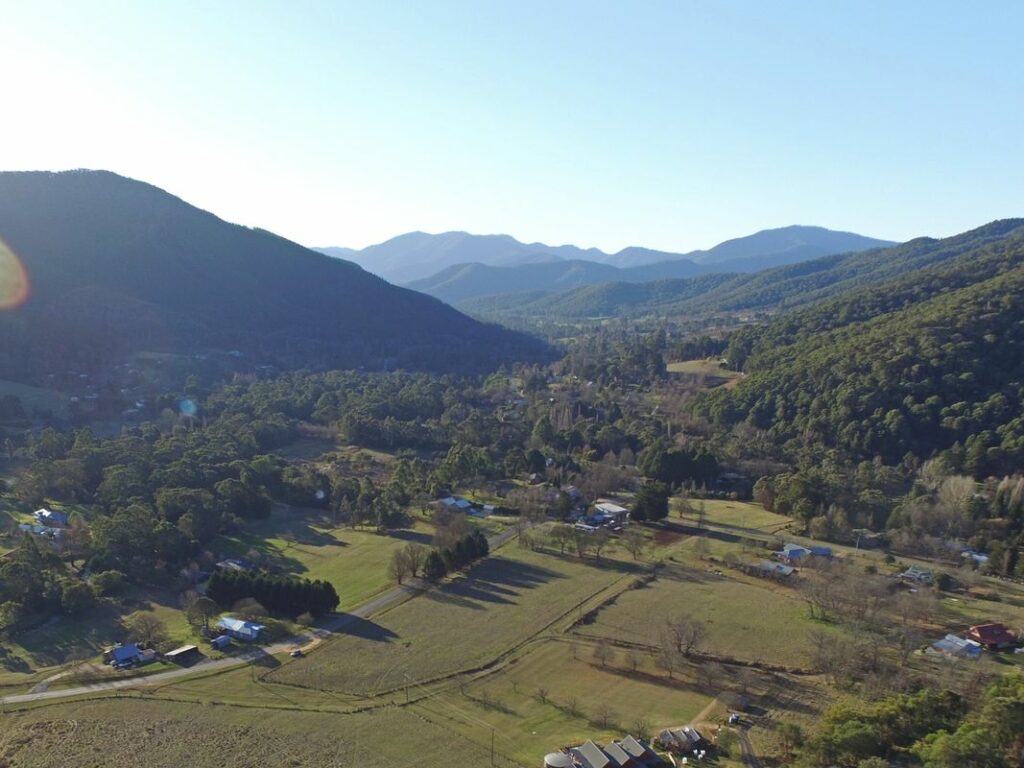
The town is in close proximity to the Victorian Alps and several alpine national parks, including Mount Buffalo National Park. Additionally, Mount Feathertop, Mount Bogong, and Mount Hotham are all situated near the town. Mount Bogong, towering at 1986 metres above sea level, holds the distinction of being the highest peak in the state of Victoria, while Mount Feathertop, at 1922 metres, is the second-highest.
Bright experiences a vibrant and lush autumn season, characterized by colorful foliage and cool days, along with chilly nights. The main industry of the town is tourism, with much focus on the autumnal colours of the European trees planted in the area. A major cultural event is the Bright Autumn Festival.
Harrietville
The town’s name, Harrietville, pays homage to the first white woman to reside there. Gold miners had already arrived by May 1860 and established a Prospecting Association. Harrietville’s origins can be traced back to the Victorian Gold Rush, with the Post Office opening on July 5, 1865. Initially, alluvial gold was the primary target with most of the early miners being of Chinese descent. A large dredge known as the Tronoh Monster operated in the area, extracting alluvial gold from the Ovens River flats. The most renowned among these is the Tronoh Dredge Hole, which has become a popular location for swimming, fishing, cycling and walking.
Wandiligong
Wandiligong, affectionately known as “Wandi” by locals, was founded in the 1850s at the height of the Victorian gold rush and once supported a thriving population of around 2,000 people. Today, the entire township is recognised by the National Trust of Australia as a historic landscape, preserving its character and charm. Visitors can still admire important heritage sites, including the Manchester Unity Public Hall, built in 1874, which remains a proud symbol of the town’s prosperous early years. Wandiligong is also home to one of the largest apple orchards in the southern hemisphere, reflecting the region’s long agricultural tradition.
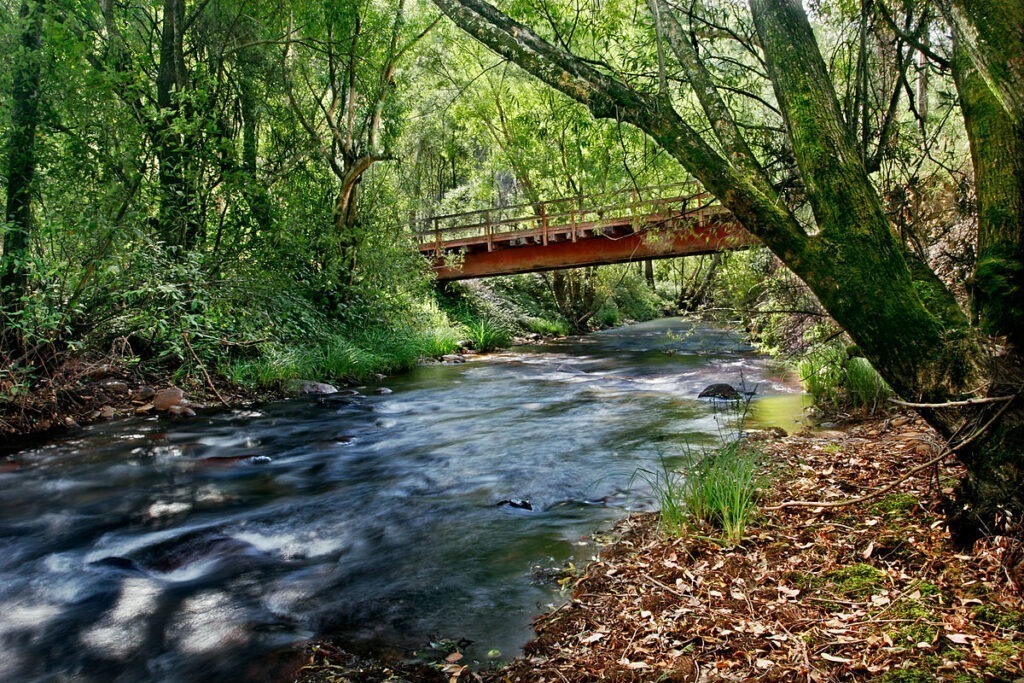
Now a peaceful and picturesque village, Wandiligong offers serene country living just minutes from Bright. Surrounded by rolling hills, heritage plantings and crystal-clear creeks, the town provides a perfect escape into nature. The Diggings Walk, complete with a charming Chinese Swing Bridge, guides visitors through remnants of its mining past while showcasing the lush valley landscape. Cycling, berry-picking in season, and gentle strolls under grand old walnut and chestnut trees are all part of the Wandi experience. Each year, the community comes alive for local events such as the Wandiligong Nut Festival, celebrating the region’s famous orchards and produce, adding to the warm, welcoming spirit that defines this magical little town.