
Chiltern, Rutherglen, Barnawartha & Wahgunyah
Chiltern
Chiltern is a historic town in northeastern Victoria, situated between Wangaratta and Wodonga within the Shire of Indigo. Chiltern is notable as the birthplace of Prime Minister John McEwen and lies just a 15-minute drive from the scenic Chiltern-Mount Pilot National Park. Originally a key stop on the main road connecting Melbourne and Sydney, the town is now bypassed by the Hume Freeway, which runs about one kilometre to the south.
The area around Chiltern was traditionally the land of the Dhudhuroa people. Evidence of their rich cultural heritage can be seen in the Yeddonba Aboriginal Cultural Site within the Chiltern-Mount Pilot National Park, where ancient artworks include an ochre painting thought to represent a thylacine, an animal that has been extinct on mainland Australia for thousands of years. European settlement began as part of the Wahgunyah cattle run, in an area initially known as Black Dog Creek.
The town, named after the Chiltern Hills in England, was officially surveyed in 1853, with development following the discovery of gold in 1858–59. Chiltern’s Post Office opened on 1 September 1859, marking the town’s establishment as miners and shopkeepers from nearby Beechworth and the Ovens Valley arrived to seek their fortunes.
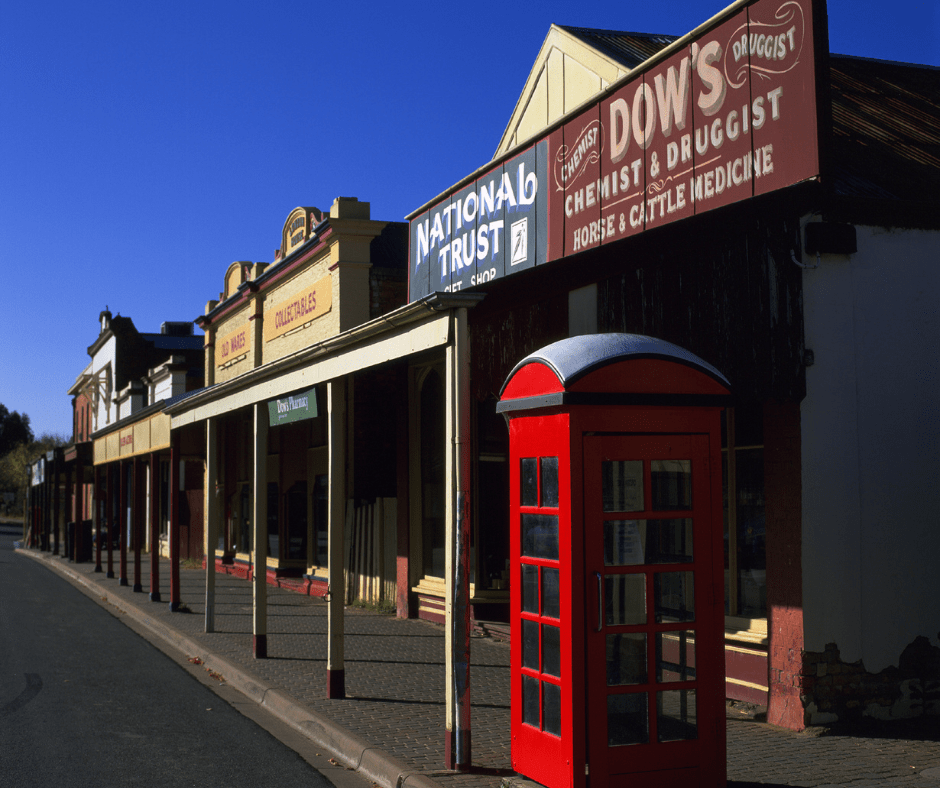
Today, Chiltern is a well-preserved heritage town with many National Trust-listed buildings lining its Victorian-era streets. Visitors can enjoy exploring antique shops, galleries, and cafes, while outdoor enthusiasts have access to the Chiltern-Mount Pilot National Park for bushwalking and birdwatching. Golfers can play a round at the Chiltern Golf Club on Howlong Road. The town also hosts a number of vibrant annual events, including the Chiltern Art Show in June and the Antique Fair in August. Chiltern’s charm, historic streetscapes, and connection to both Indigenous and gold rush heritage have even made it a sought-after location for film productions, adding to its unique character and appeal.
Rutherglen
Rutherglen is a historic town in northeastern Victoria, located near the Murray River on the New South Wales border. Its name was inspired by the Scottish town of Rutherglen, just outside Glasgow. Positioned north of Wangaratta and west of Wodonga, Rutherglen lies only 10 kilometres from the Murray River at the border towns
of Wahgunyah and Corowa.
Originally established as a gold-mining town in the mid-19th century, Rutherglen has since evolved into a celebrated wine-producing region, home to 17 wineries within a short drive of the town centre.
The town’s main street retains its historic charm, with many original shopfronts and buildings reflecting Rutherglen’s 19th-century heritage. Visitors can explore Lake King, framed by Apex Park and Rutherglen Park, or admire the distinctive wine-bottle-shaped water tower on Campbell Street. The Rutherglen Post Office opened on 1 November 1860, while the Magistrates’ Court operated until 1 January 1990.
Today, the town is a hub for wine tourism, centred around the Rutherglen Wine Experience Visitor Information Centre on Main Street, which provides insights into the local history, winemaking processes, and tourist attractions.
Rutherglen’s wine region is particularly renowned for its fortified wines, including Muscat, Topaque (formerly Tokay), and Port. The area’s largest winery, All Saints Winery, established in 1864 near Wahgunyah, features beautiful landscaped gardens, ponds, a restaurant, and wine-tasting facilities.
The region also hosts a variety of annual events, such as the Rutherglen Wine Festival, showcasing local vintages, and the Rutherglen Agricultural Show, celebrating the area’s farming heritage. With its combination of historic charm, world-class wines, scenic landscapes, and community events, Rutherglen is a must-visit destination for wine lovers, history enthusiasts, and anyone exploring Victoria’s northeast.
Barnawartha
Barnawartha, a historic north east Victorian town near Wodong, began as a pastoral run in the late 1830s before establishing as a township in 1860. Originally known for agriculture and wineries, the town survived a major 1952 bushfire and transformed from a small agricultural hub into a residential area with nearby industrial employment.
Established in 1837 as a pastoral run, the town was briefly known as “Indigo Crossing” before adopting the name Barnawartha. The name is believed to derive from an Aboriginal word, with interpretations including “tall rushes,” “parting of the storms,” or “deaf and dumb”.
Joseph Slack settled the area in 1836, followed by George Hume Barber in 1838, who managed a massive sheep run. Surveyed in 1857, the township officially settled in 1860, with the post office opening in the same year.
The region became known for agriculture and viticulture. A winery was established in 1858, later becoming Gehrigs Winery in 1867. A flour mill was built in 1860, and the Barnawartha Railway Station opened in 1873, operating until 1985.
In 1952 a severe bushfire destroyed ten houses, the Methodist church, an old mill, and several businesses. In 1982 a fatal collision occurred near the station when a freight train hit the stationary Spirit of Progress in heavy fog.
Today, the town serves as a residential base within the Indigo Shire, with the nearby Logic Industrial Estate supporting employment.
Wahgunyah
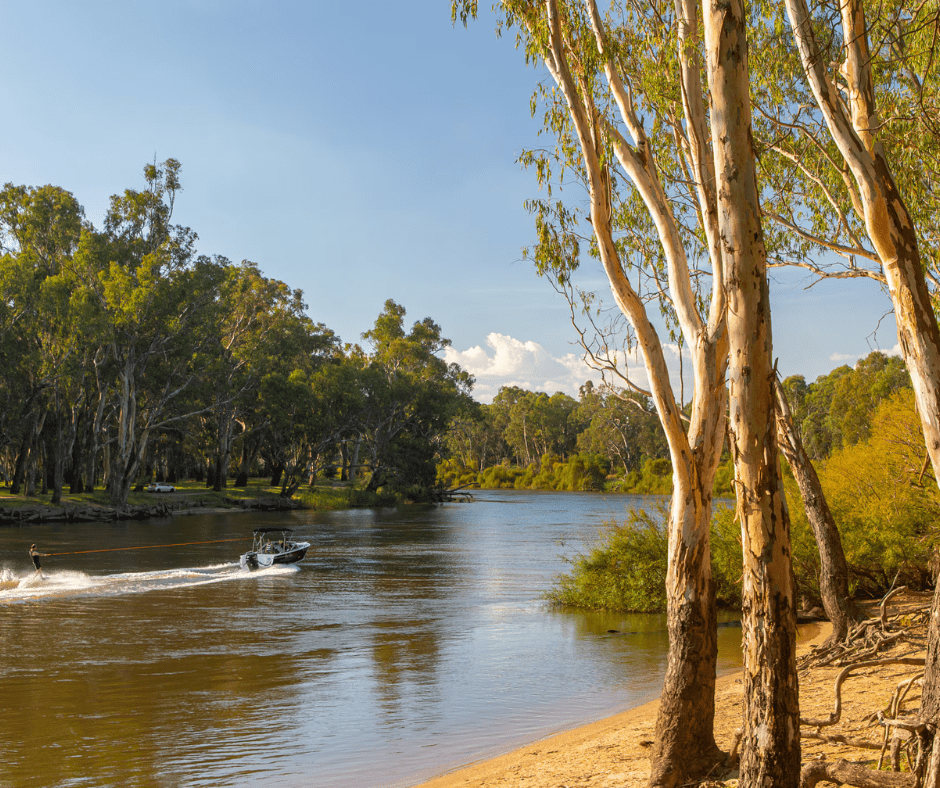
The small Murray River town of Wahgunyah is located on the southern banks of the Murray river. Cross the Murray and you will be in the town of Corowa in New South Wales.
It is a great place for watersports such as rowing, canoeing, fishing, water skiing and boating. Explore the walking trails around the recreational reserve and picnic spots in town and at Lake Moodemere. Alternatively cycle the Rail Trail Ride to Rutherglen or the Bridge to Bridge track.
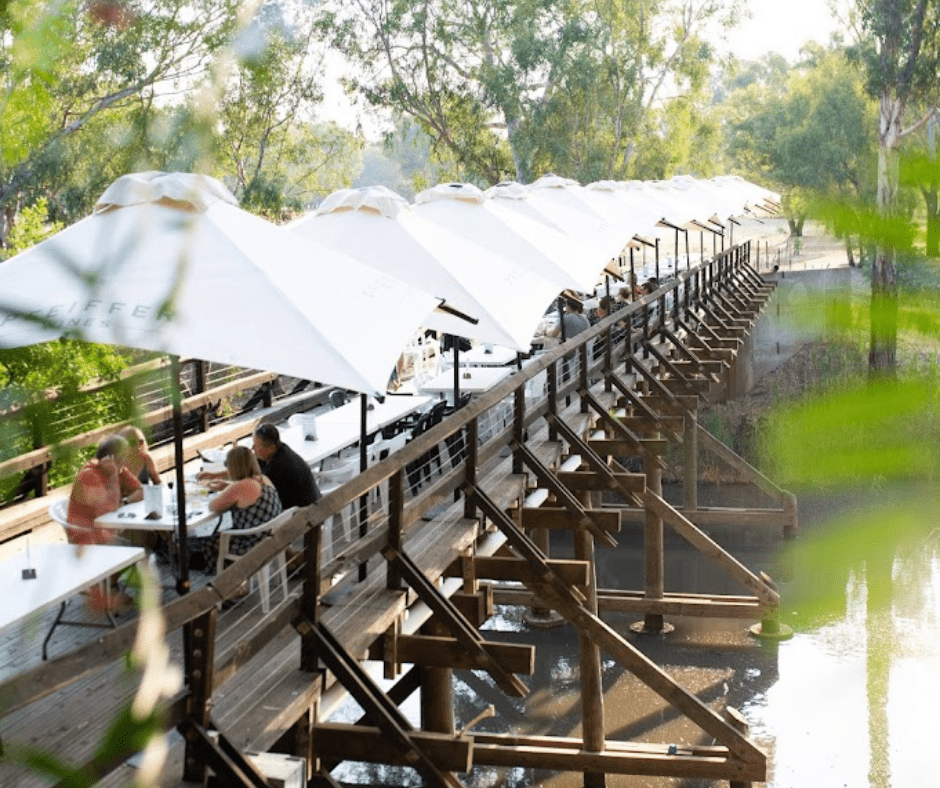
The area is well known for having some of the states oldest and newest wineries including Pfeiffers, All Saints, Cofields and Dinah Wines. Enjoy a wine tasting and a cheese platter on the Sunday Creek bridge at Pfeiffer Wines and take the opportunity to feed the turtles while you are there.