Olive Hills Estate: where you’ll find heritage in the walls and character in the glass
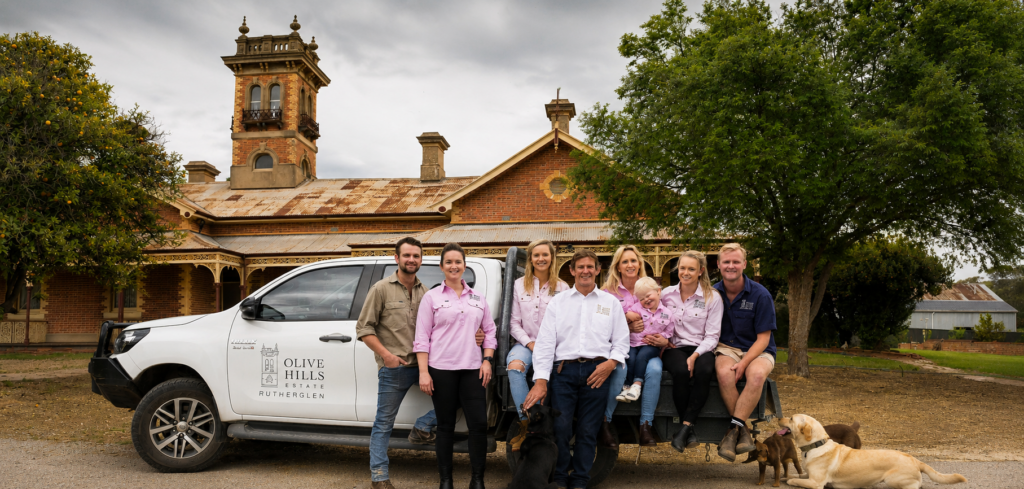
As you approach the Olive Hills Estate cellar door you can’t help but be a little awestruck at the grand old mansion that perches atop the hill overlooking the vineyard’s 40 acres of grapevines.
It’s the kind of arrival that makes you slow down just a little, take in the view, and think, “Alright…this place has stories.”
“Actually, we get visitors who turn off the highway because they have seen our home from the road and curiosity gets the better of them,” says winemaker and owner Ross Perry, who with wife Kay, bought the property in 1996.
Olive Hills Estate is a dryland vineyard with 22 varieties of grape. Red varieties include Cabernet Sauvignon, Sangiovese, Shiraz, Durif, Malbec, Nebbiolo and Cinsault and in the white range there is Semillon, Marsanne, Chardonnay and Viognier.
“Dryland means it’s a vineyard that relies on rainfall alone, with no irrigation to keep the vines growing,” said Ross.
It’s old school, low intervention farming – and in Australia, it’s usually found in places where growers trust the soil, the climate and the resilience of their vines.
“We observe sustainable practices throughout our operation; we don’t use any insecticides and only use organic certified foliage sprays to prevent mould.
”Together, these practices coax smaller, more flavour intense berries from the vines, producing fruit with richness and balance, the kind winemakers love because it naturally leads to wines with flavour, texture and personality.
When time, craft and soil converge to create wines that speak of place
It took the Perry’s a decade to achieve their dream of creating a unique vineyard and winery oozing with character and charm.
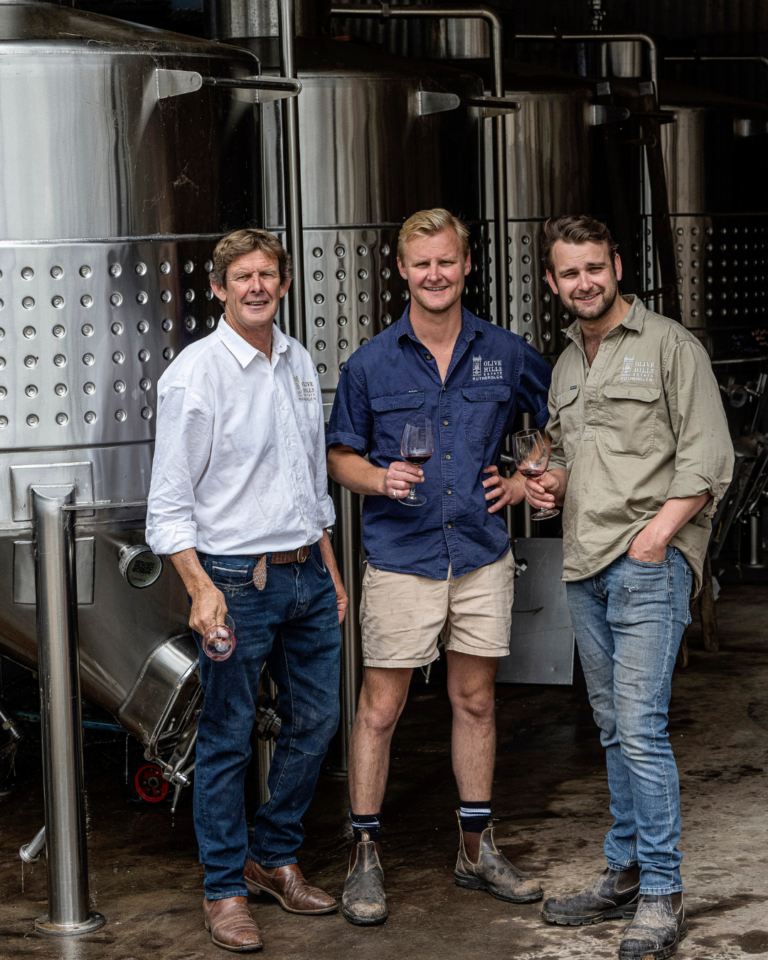
Today, Olive Hills is a true family affair, with Ross and Kay’s son Harry – now armed with a Bachelor of Applied Science in Oenology – stepping into the winemaking alongside his father.
The two describe their winemaking philosophy as one that keeps varietal character front and centre – letting each grape speak clearly in a wine that’s balanced, approachable and true to type. Oak and fermentation influences are used with restraint, playing a supporting role that enhances flavour and length without ever overshadowing the fruit.
“In a dryland, biodiverse vineyard the fruit develops intensity and balance on its own,” says Ross.
“When the vineyard does most of the talking, we don’t need to interfere – we just guide those natural characters into wines that are varietal true and beautifully approachable.”
Olive Hills Estate is open seven days a week between 11am and 3pm.
When you visit you can expect to be greeted by Ruth, the Kelpie, and Monti (pulciano), the Labrador.
And that’s the charm of Olive Hills: by the time Ruth and Monti have ushered you inside, you’re not just stepping into a cellar door – you’re stepping into someone’s life’s work.
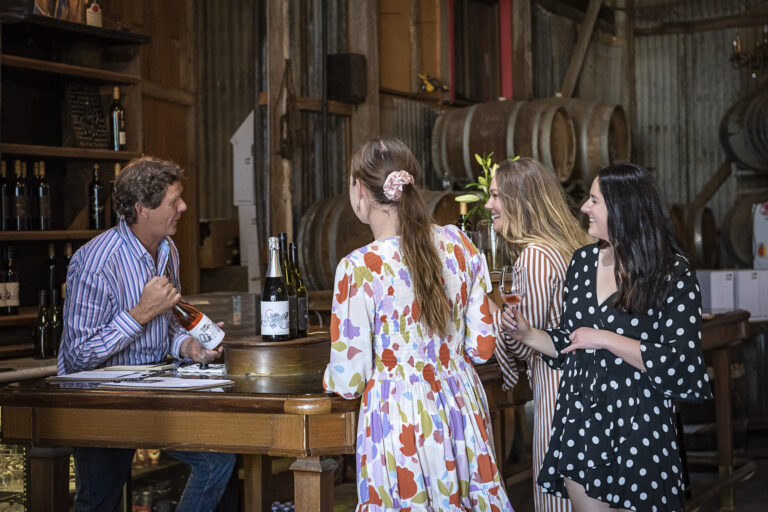
More often than not, it’s Ross himself pouring your glass, speaking in that deep, gravelly voice that seems carved from the same earth the vines grow in.
In a world of outsourced tastings and polished hospitality scripts, it’s rare to meet the winemaker at the counter, rarer still to meet one who rebuilt the place with his own hands.
Here, the story, the vineyard and the wine all come from the same source – and you can taste it.
For more about Olive Hills Estate – click here